
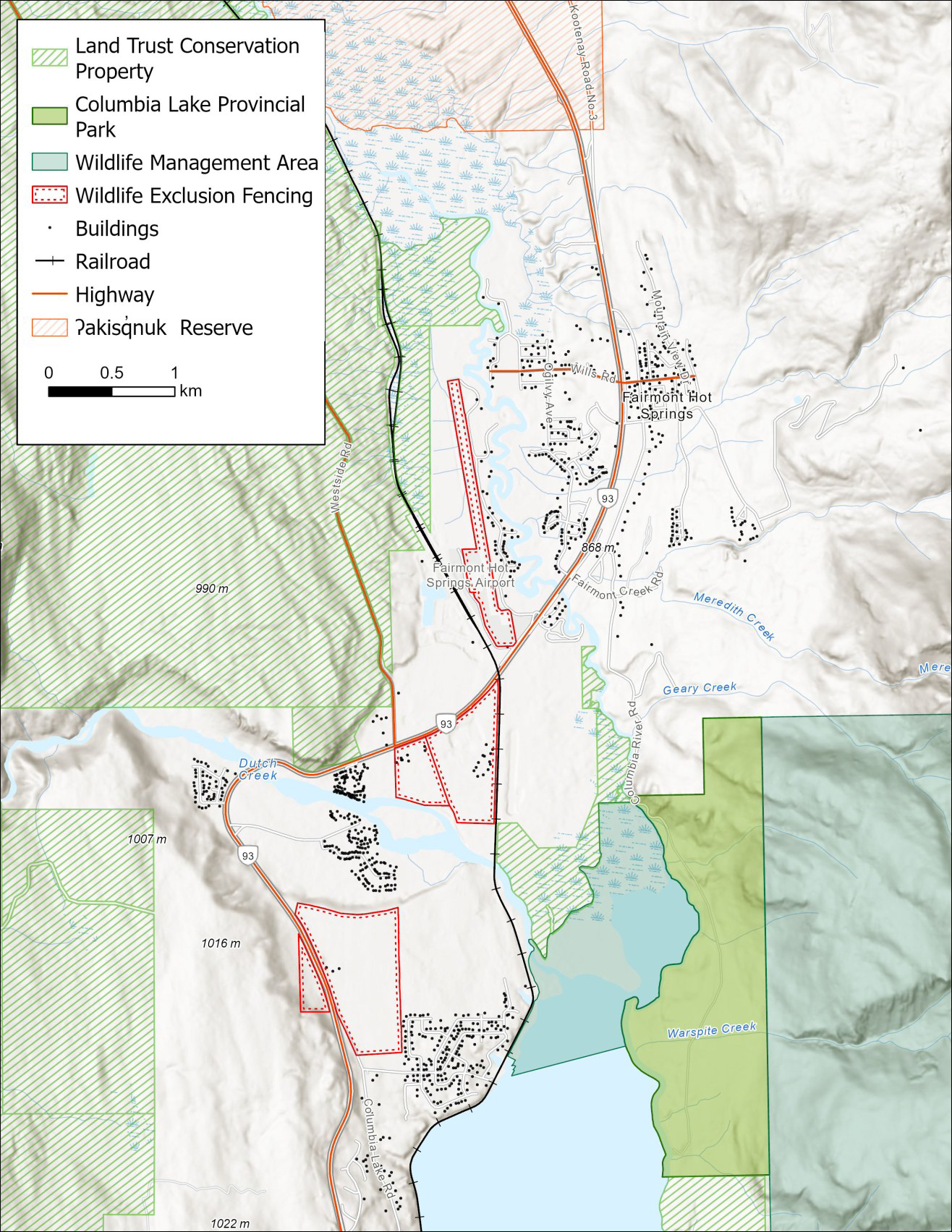
A pinch point for wildlife movement at the north end of Columbia Lake
Columbia Lake Ecological Corridor | Features | Navigating Development and Yawuʔnik̓’s Ribs
At the north end of Columbia Lake, wildlife must move through one of the corridor’s most constrained areas. This passage includes a challenging mix of housing development, a busy highway, rail infrastructure, an airport, golf course, eight foot-high wildlife-exclusion fencing, and natural landforms, including the Hoodoos or Yawuʔnik̓’s Ribs.
Despite these barriers, there are important opportunities for wildlife movement, including the railway underpass below Highway 93/95 and a network of surrounding lands managed for conservation. These include Columbia Lake Provincial Park, East Side Columbia Lake Wildlife Management Area, land trust conservation lands, and agricultural lands. Together, these lands and passage opportunities help wildlife move through an otherwise complicated landscape.
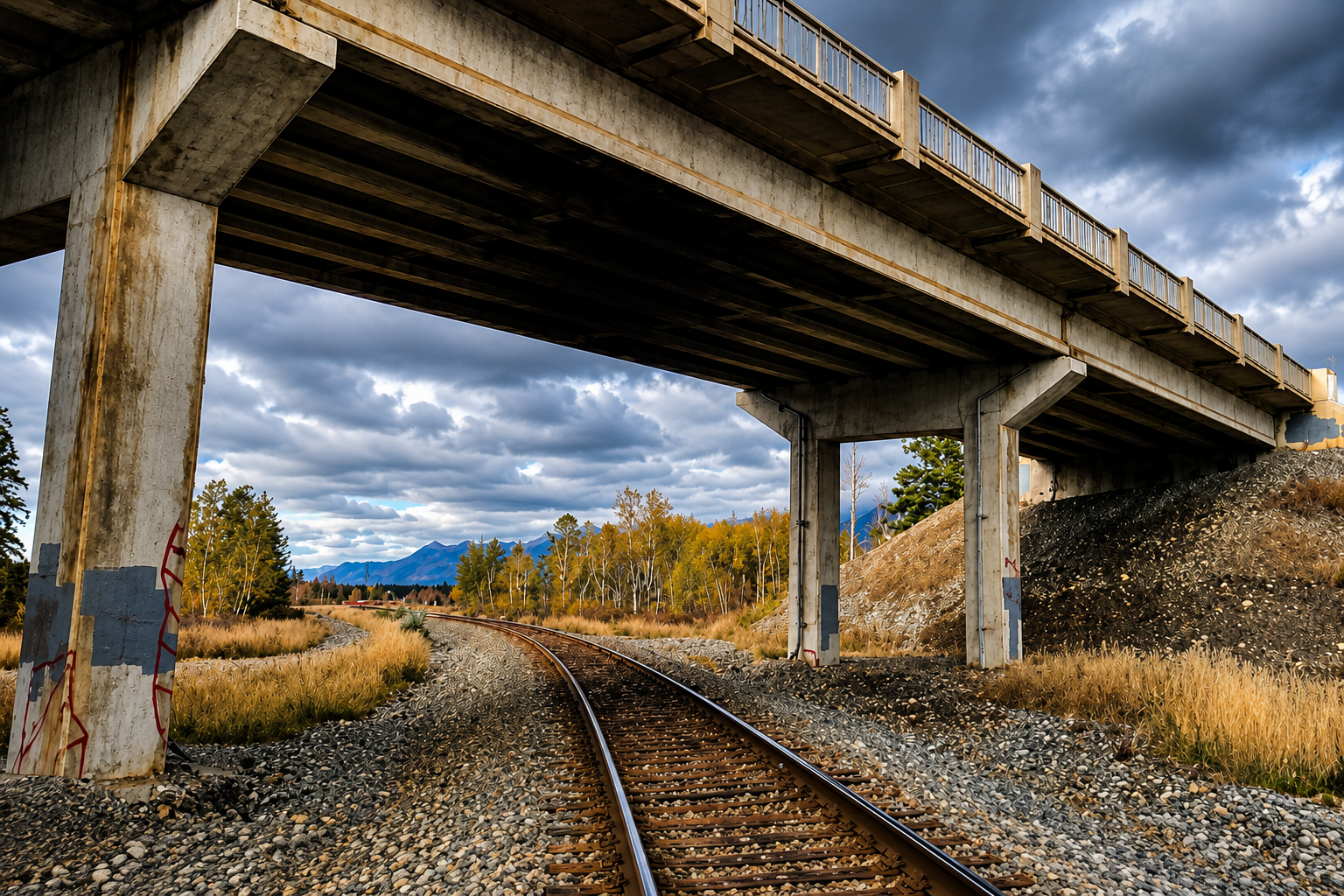
This highway underpass could be enhanced to support wildlife movement
The north end of Columbia Lake is a pinch point for wildlife movement and presents a significant challenge to connectivity in the Columbia Lake Ecological Corridor. Development and infrastructure combine with natural features which rise some 200 m above Columbia Lake, to complicate wildlife movement, funneling it to any available passage.
From the north end of Columbia Lake, through to ʔakisq̓nuk First Nation Reserve lands, the landscape has limited permeability (see Feature: Drone Bear). Housing developments, a busy two-lane highway, an airport, golf course, and eight-foot-high wildlife-exclusion fencing, all combine to create a challenging matrix for wildlife to navigate.
One area that may provide enhancement opportunities is the railway underpass below Highway 93/95 (see photo). Lying in a narrow gap between two high-fenced areas, the underpass avoids the highway with only the railway as a direct threat. Also supporting connectivity through this pinch point is a mix of public and private lands that are managed for conservation to some degree. They include Columbia Lake Provincial Park, East Side Columbia Lake Wildlife Management Area, land trust conservation lands and agricultural lands. These parcels facilitate wildlife passage through what is otherwise a labyrinth of connectivity barriers such as fencing, roads and human buildings and activity.
Maintaining opportunities for connectivity in pinch point areas such as this is a crucial step to maintain overall corridor function in the Columbia Lake landscape.
Sources and Further Reading: