Kootenay Connect: Because Nature Needs to Move
Kootenay Connect is a nonprofit society that focuses on the science and policy to formally establish ecological corridors in BC.
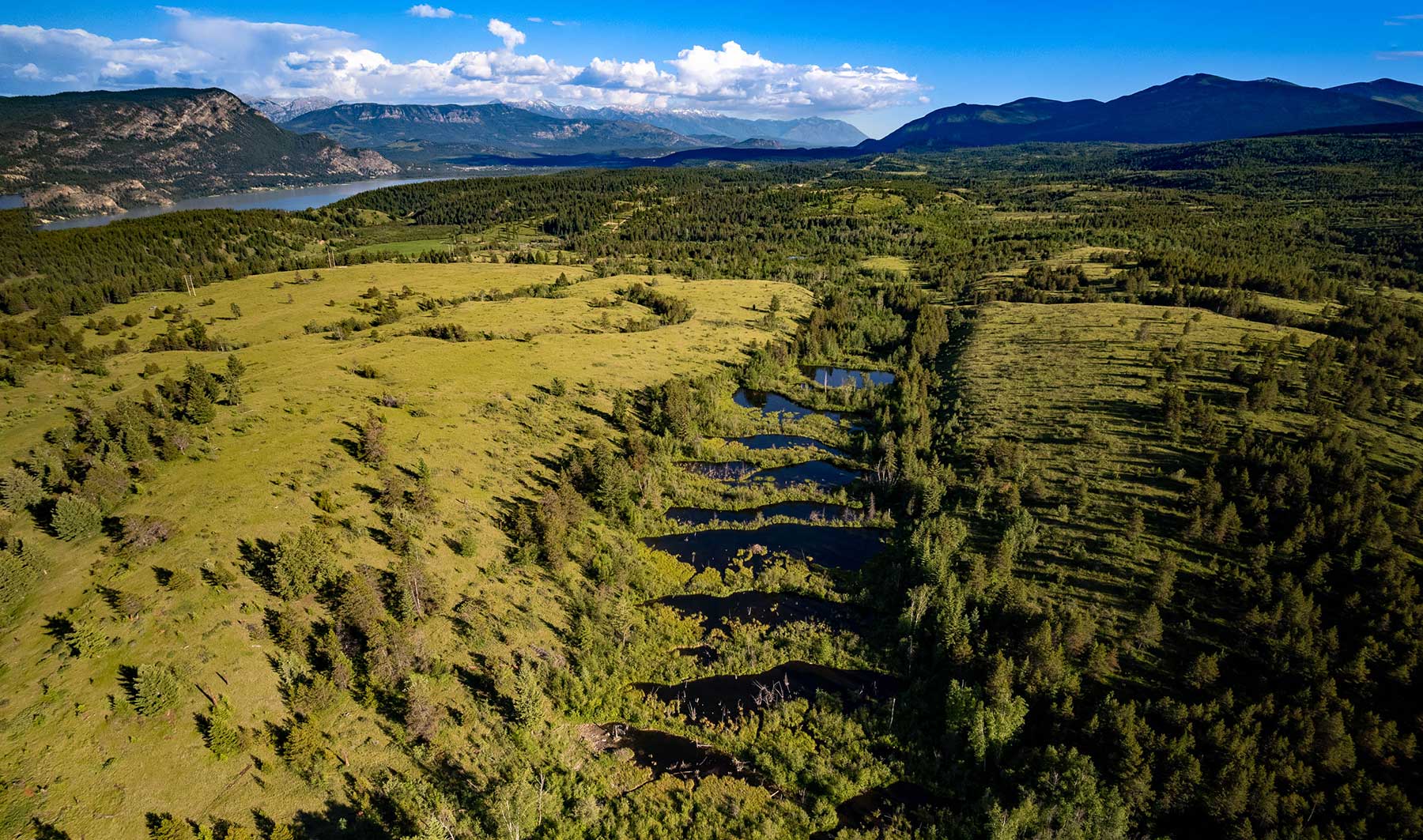
Kootenay Connect
Pat Morrow
Imagine safe passage in the Kootenays
Kootenay Connect was born out of our work on large carnivores and their need to move across large areas. It showed us how essential connected habitats are and made clear that connectivity matters for all species, from grizzly bears to badgers to bats. British Columbia’s Kootenay region—with its remarkable wild nature and strong culture of conservation and stewardship—offered an excellent place to bring this vision to life.
Since 2018, Kootenay Connect has woven together leading science, local and Indigenous knowledge, and community-based action to advance wildlife movement, ecological connectivity, and large-scale conservation across the region. What began as a vision for 12 ecological corridors has become an ambitious, on-the-ground effort to restore corridor habitats and ecosystems across the Kootenays. By working across jurisdictional boundaries, Kootenay Connect identifies where conservation can have the greatest impact—protecting corridors that support healthy wildlife populations and resilient ecosystems for current and future generations.
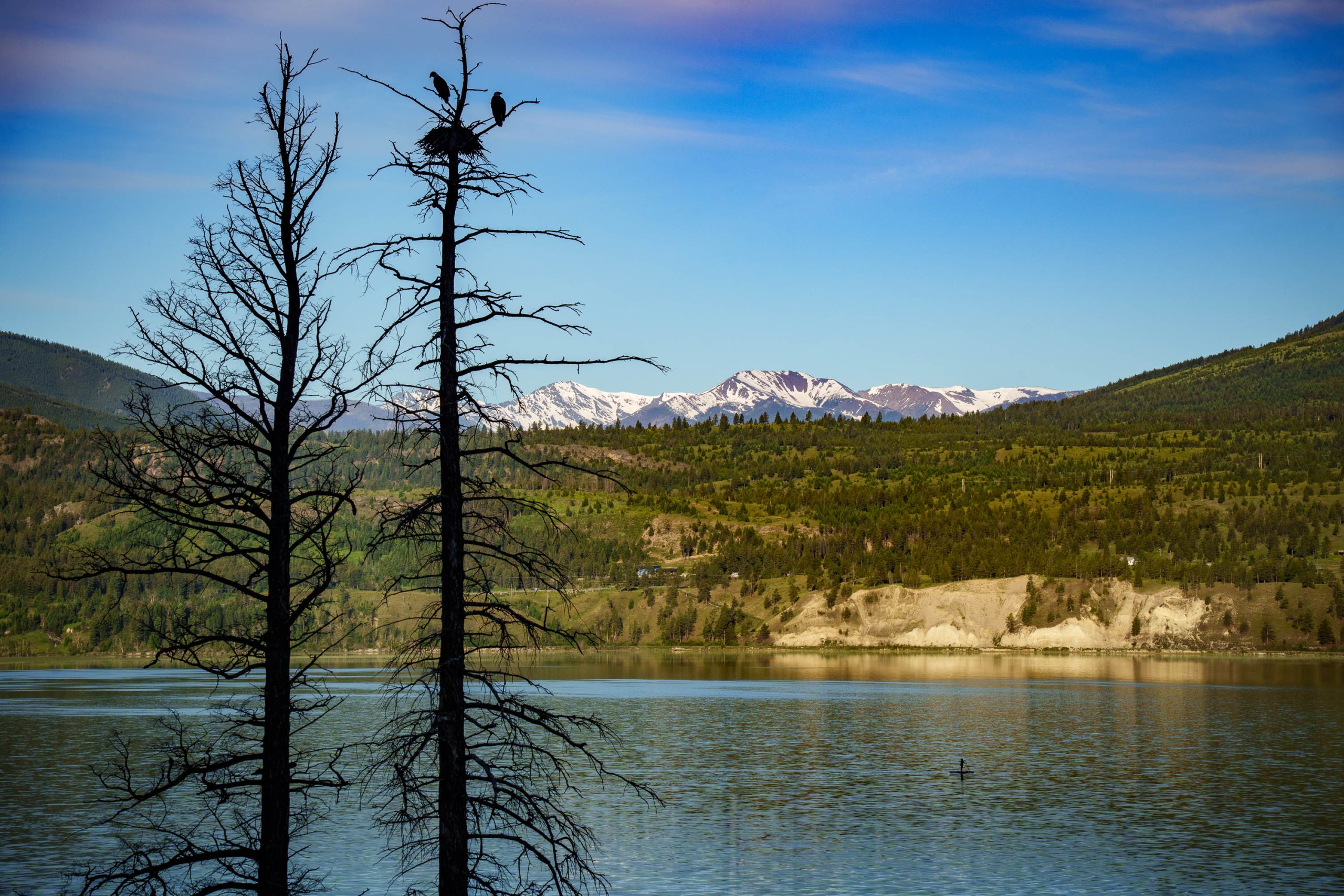
Columbia Lake Wildlife Corridor
Pat Morrow
Our Vision
Kootenay Connect envisions a regional network of ecological corridors—a connected web of life that links, habitats, ecosystems and protected areas across the Kootenays.
The 12 wildlife corridors that guide our vision link valley-bottom riparian areas and wetlands to adjacent uplands and alpine habitats, helping sustain regional biodiversity, healthy wildlife populations, and climate resilience. These corridors go well beyond narrow, linear strips of land to include a variety of habitats that wildlife and species at risk depend upon.
Our work supports local conservation efforts, informs and inspires provincial and regional corridor policy, and aligns with BC’s 30×30 Strategy, the Canadian Ecological Corridors Program, and IUCN guidance on conserving connectivity.
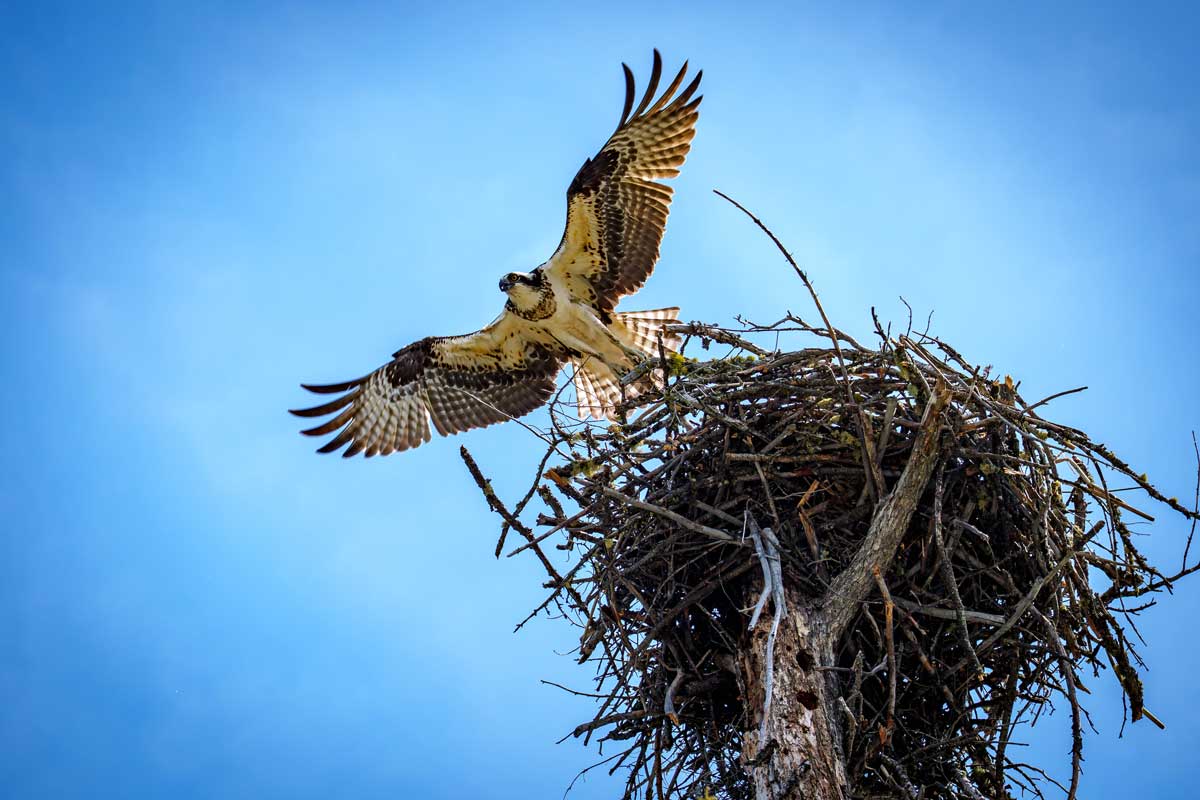
Osprey Nest
Pat Morrow
Our Approach
Kootenay Connect works across jurisdictional boundaries, as nature does, using a landscape-scale approach to identify strategic opportunities for conserving ecological corridors in southeastern BC. Our work is guided by perspectives, data, and knowledge of local biologists, conservation groups, hunters and fishers, First Nation communities, ranchers and farmers, and timber companies, combined with lessons learned from corridor conservation efforts from around the world.
We aspire to support healthy wildlife populations, connectivity, and ecosystem resilience by:
Now is a critical time to put these ideas into practice to guide how we live, work and play within this region because in many cases, ecological connectivity has not been completely shut off. Our rugged mountains have tempered the pace and extent of human development leaving us with many opportunities to secure a network of ecological corridors while we can.
Our Story
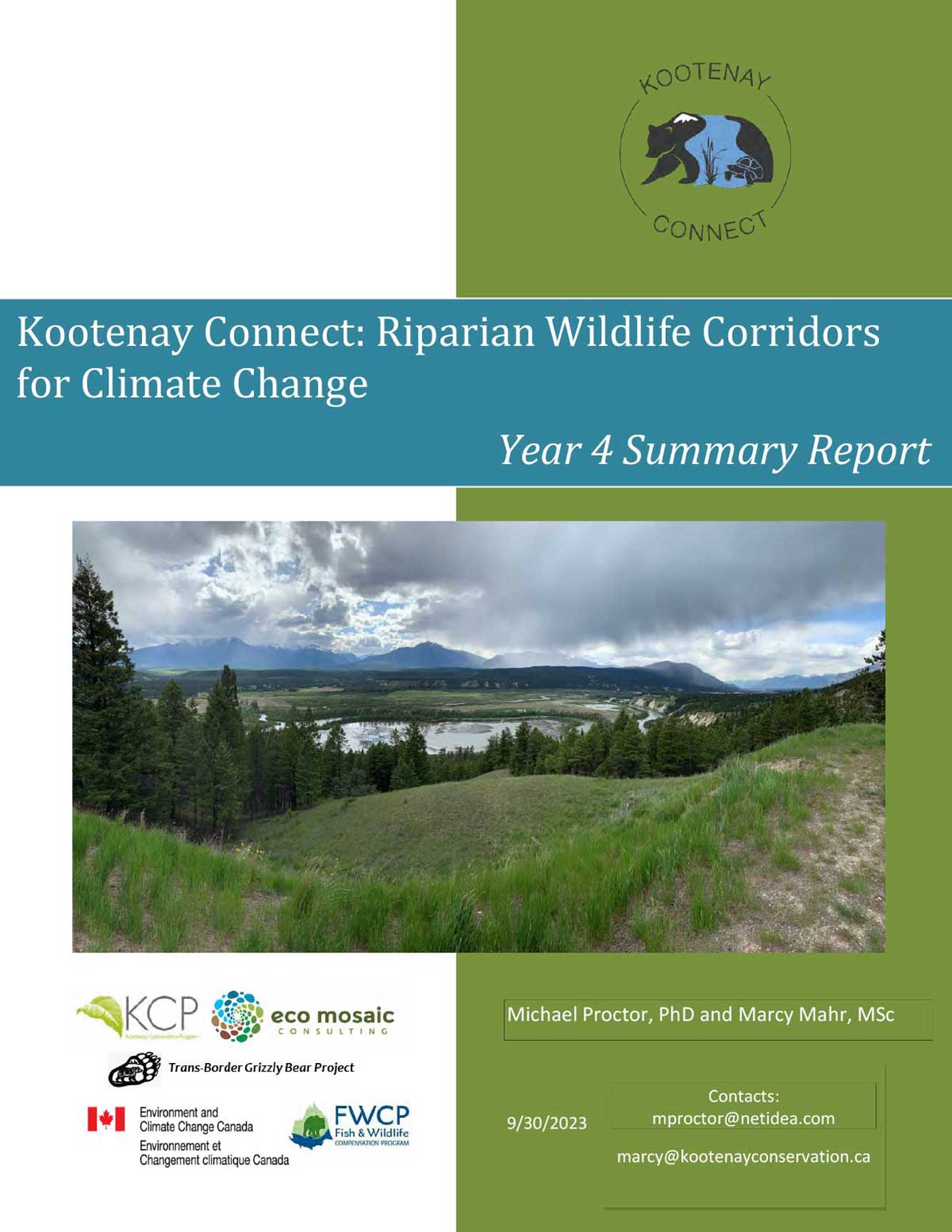
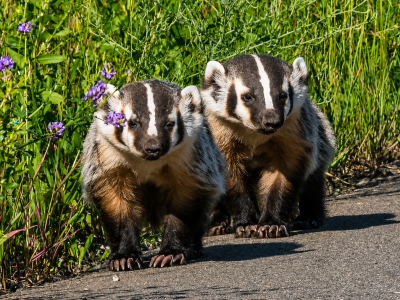 Kootenay Connect began in 2018 with a bold question: how can wildlife continue to move freely across our mountain and valley landscapes increasingly shaped by human activity? The Kootenays are defined by their rich diversity—sweeping valley bottoms, rugged mountain ranges, and protected natural areas—but these landscapes are not always well connected for the species that depend on them. We presented our science-based vision for a landscape-level approach to conservation in, Kootenay Connect: Riparian Wildlife Corridors for Climate Change – Preliminary Analysis, which provides a framework for using both on-the ground and policy approaches to advance ecological corridors in the Kootenays.
In 2019, we teamed up with Kootenay Conservation Program to launch Kootenay Connect Priority Places, a 7-year project funded by Community-Nominated Priority Places for Species at Risk through the Canada Nature Fund. Between 2019-2026, over $12.6 million was invested in 7 of Kootenay Connect’s corridors with over 60 projects led by more than 40 local organizations and specialists to improve thousands of hectares of habitat benefiting 34 of the region’s most vulnerable species at risk. This region-wide project created a conservation legacy that includes inventories documenting nearly 4,500 species, over 13,000 hectares of habitat enhancements and restoration, 534 hectares of new Wildlife Habitat Areas, and over 4,400 hectares of new conservation lands.
Concurrent with this Priority Places project focused on habitat stewardship, Kootenay Connect’s team was also advancing our goal of establishing one of BC’s first recognized Ecological Corridors. We teamed up with Parks Canada, the Ministry of Water, Land and Resource Stewardship and Together for Wildlife, BC Parks, Ktunaxa Nation Council, ʔakisq̓nuk First Nation and the Nature Conservancy of Canada to form the Kootenay Connectivity Working Group. Collectively, we developed a rigorous process for selecting the Columbia Lake Ecological Corridor as a pilot. Although there is no Provincial legal framework for establishing Ecological Corridors, we have submitted a proposal to the provincial government for consideration based on our assessment that there are sufficient existing land use tools and designations to support managing the Columbia Lake Ecological Corridor for wildlife connectivity.
Kootenay Connect: a safety net for biodiversity
Networks of ecological corridors provide a safety net for biodiversity in our changing world. Networks include areas that are sufficient to meet the needs of species throughout their life cycles and migratory ranges; and as climate change causes ecological disruption and risk, species are forced to shift where they live and adapt to new habitat conditions. Ecological corridors play a crucial role in this process by connecting habitats and giving species the space and flexibility to adapt. Across the Kootenays, riparian areas, wetlands, native grasslands and mature forests are particularly important habitats for species who live their way across landscapes.
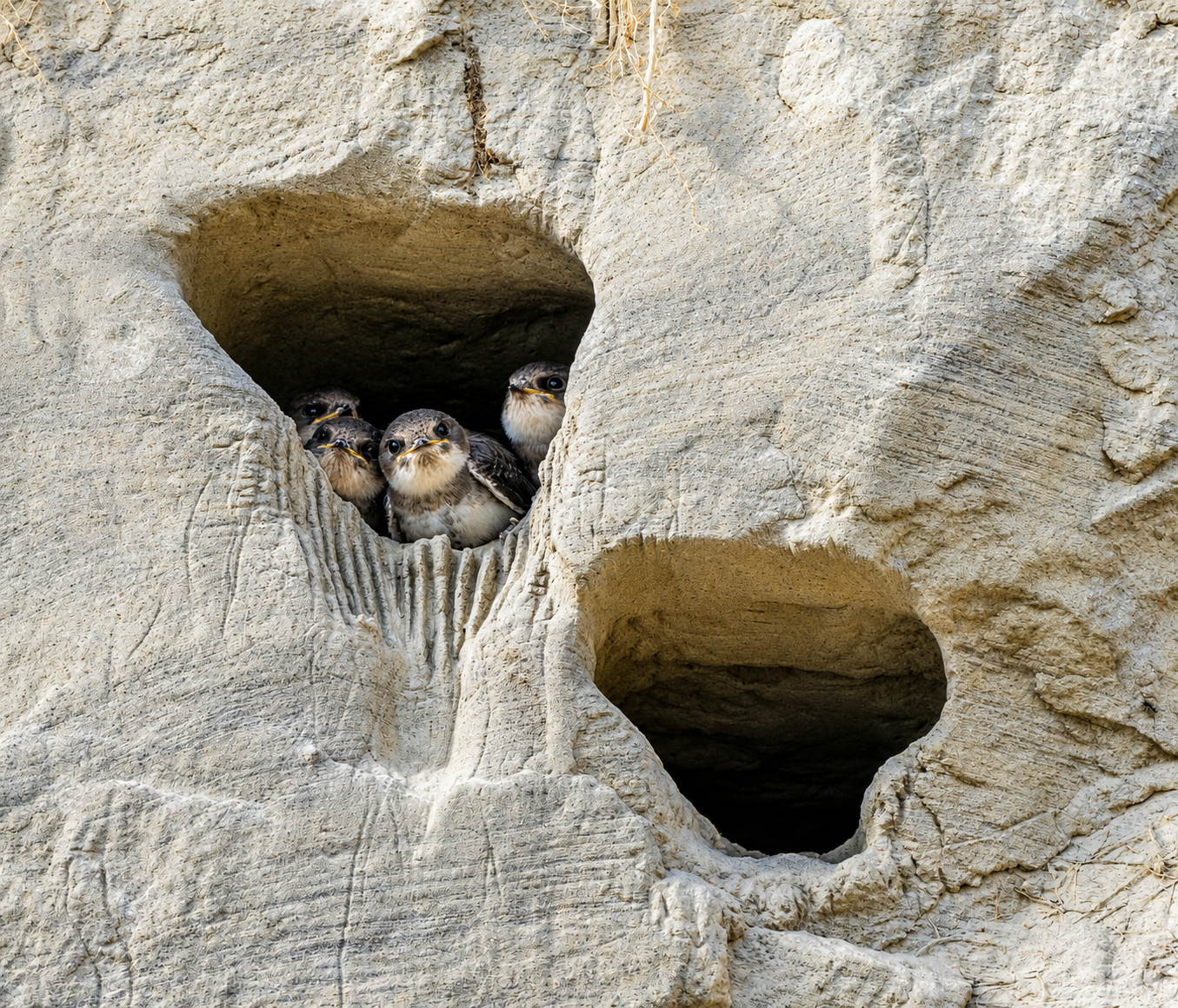
Bank Swallows
Rylee Haubrich
Media Spotlight
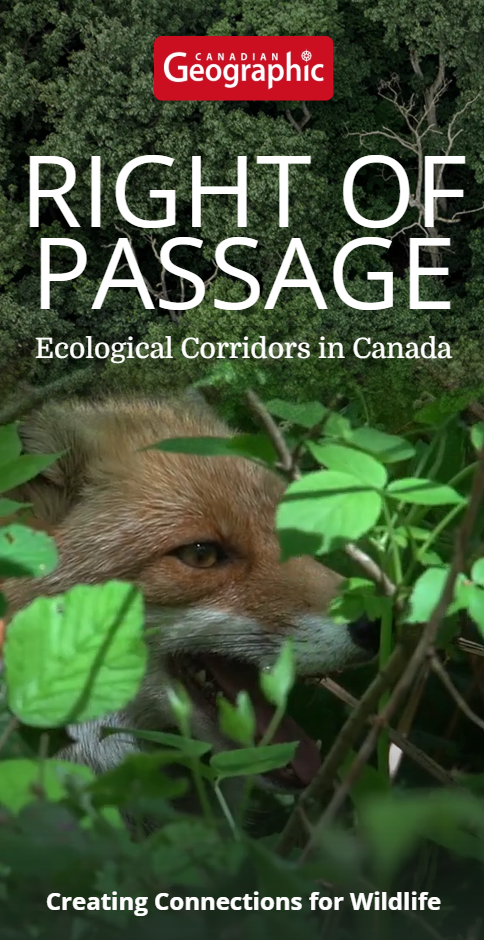
Kootenay Connect was featured in Canadian Geographic, showcasing its mission to establish protected corridors in the Kootenays. Brad Badelt writes:
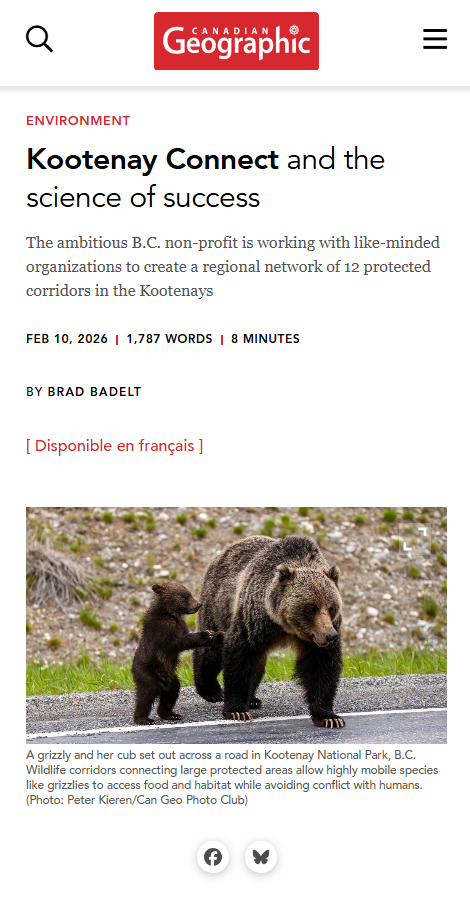
In Canadian Geographic’s Right of Passage, navigate stories about ongoing work to create ecological corridors and enhance connectivity in national priority areas and beyond.